
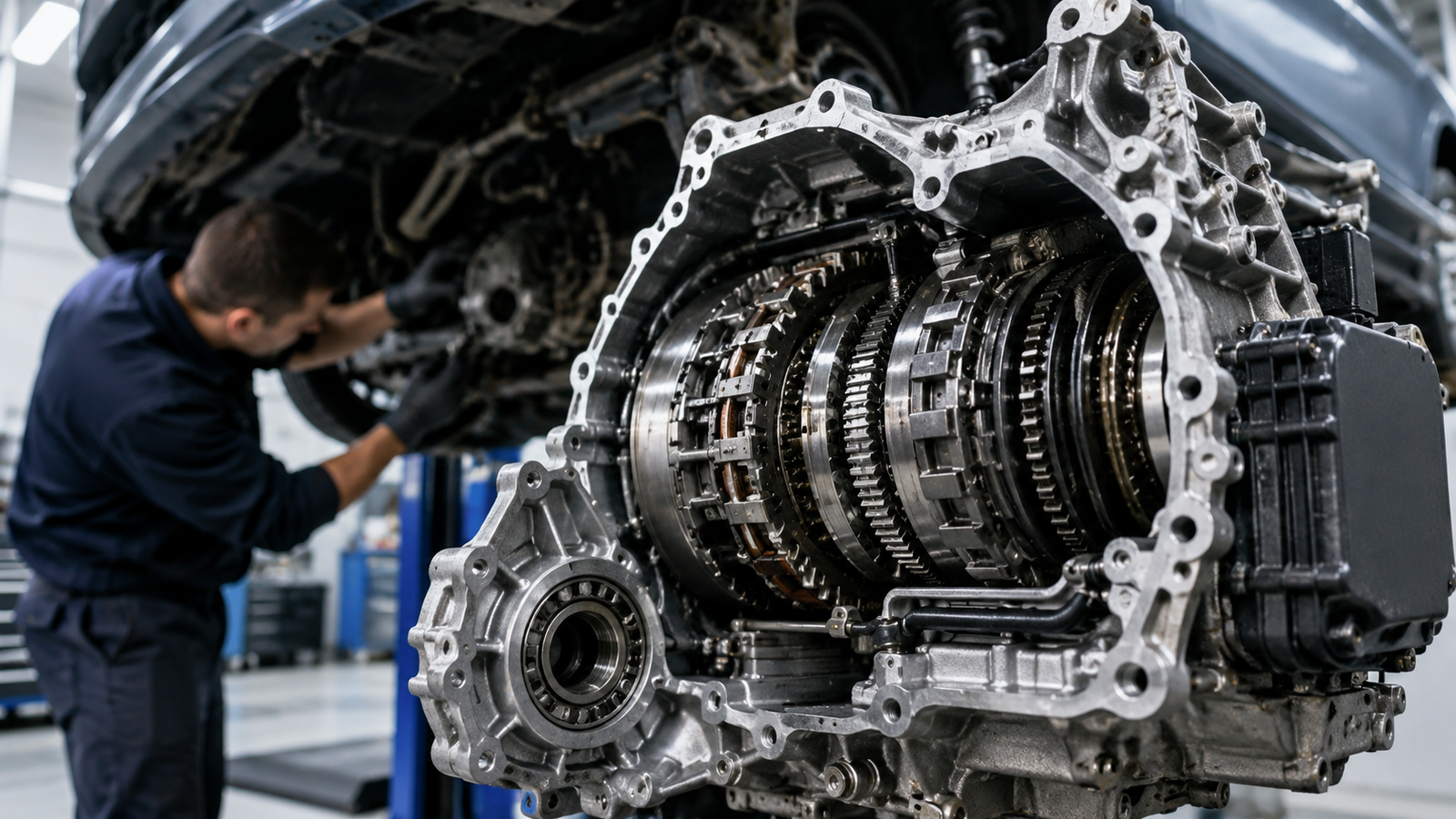
Powershift is Ford’s automatic gearbox, fitted to many Focus, Fiesta, Kuga and other models over the last fifteen years or so. When it works, it’s smooth and efficient. When it goes wrong, it typically shudders, hesitates or jerks between gears, and the repairs are among the most expensive a Ford can need. On an older car, the cost of putting it right often comes close to, or exceeds, what the car is worth.
This guide explains what Powershift is, why it develops faults, which cars are affected, the warning signs to watch for, what the repairs actually cost, and how to decide whether to fix it or move the car on. Plain English throughout.
What is Powershift, and what goes wrong?
Powershift is the name Ford gives to its dual-clutch automatic transmission. Unlike a traditional automatic, which uses a torque converter and generally feels very smooth, a dual-clutch gearbox works more like an automated manual, with two clutches doing the work of changing gear for you.
That design makes it efficient and quick-shifting, which is why Ford chose it. But the dry-clutch versions in particular developed a reputation for trouble as they aged. The most common complaints are a shudder or judder when pulling away, hesitation before the car moves, and jerky or clunky gear changes. Left alone, these tend to get worse, not better.
The faults usually trace back to two areas: the clutch packs themselves wearing or contaminating, and the mechatronic unit, the electronic-hydraulic control module that manages the gearbox. Either can cause the symptoms above, and diagnosing which one it is matters, because it changes the cost significantly.
How a dual-clutch gearbox actually works
It’s worth a moment on this, because it explains why the faults feel the way they do.
A dual-clutch gearbox has two clutches: one handles the odd gears (first, third, fifth), the other the even gears (second, fourth, sixth). While you’re driving in one gear, the gearbox has already pre-selected the next one on the other clutch, ready to swap almost instantly. That’s what makes it quick and, when healthy, smooth.
The trouble is that all of this depends on the clutches engaging cleanly and the control unit judging it perfectly. As the clutches wear or the mechatronic unit starts to struggle, that clean hand-off breaks down, and you feel it as shuddering, hesitation or a jolt. It’s not your imagination, and it’s not something that “beds back in”. It’s a sign the system is wearing out.
Worth knowing. A Powershift shudder when pulling away is the single most common early symptom, and it’s the one people most often ignore or get used to. Catching it early, when it might still be a clutch or software issue, is far cheaper than leaving it until the gearbox needs replacing.
Which Ford models are affected
Powershift was fitted across a broad range of Fords, so a lot of cars are affected. In our experience, the problems show up most often on:
The Ford Focus, which is the model we most commonly see with Powershift faults.
The Ford Fiesta, next most common, particularly the automatic versions owners bought for town and commuter driving.
The Ford Kuga, Mondeo, C-Max, B-Max and Galaxy also used Powershift and can develop the same issues.
If your automatic Ford from roughly the 2011-onwards era is shuddering or hesitating, there’s a good chance Powershift is the culprit. It’s worth saying that not every automatic Ford has Powershift, and later revisions improved things, but across the used cars we see, it remains one of the most common serious faults.
Common misconception. “It’s just the way automatics drive.” A healthy automatic, including a healthy Powershift, does not shudder when you pull away or hesitate before moving. If it does, that’s a fault developing, not a characteristic. Treating it as normal is how a repairable problem becomes a gearbox replacement.
The warning signs of Powershift trouble
The symptoms are usually easy to feel, even if you’re not mechanically minded. Watch for:
A shudder or vibration when pulling away, especially from a standstill or on a slight incline. This is the classic early sign.
Hesitation before the car moves, a delay between pressing the accelerator and the car responding.
Jerky, clunky or harsh gear changes, rather than the smooth shifts the gearbox had when new.
The car slipping out of gear, revving without accelerating, or feeling like it’s briefly in neutral.
A transmission warning light, or a message to have the transmission serviced or checked.
In more advanced cases, the car going into a limp or safe mode, limiting speed and gears to protect itself.
If you notice these, it’s worth getting the car properly diagnosed sooner rather than later, because the difference between a clutch-level repair and a full gearbox replacement is large, and it often depends on catching the fault before further damage is done.
What Powershift repairs actually cost
This is where owners get a shock, because Powershift repairs are expensive whichever way they fall.
Owners who contact us after being quoted for a clutch pack or mechatronic repair, the “less bad” outcome, typically report figures in the region of £800 to £1,500. That’s a significant bill, but it’s at least a repair rather than a replacement.
Where the gearbox is beyond economical repair and needs full replacement, owners are commonly quoted £4,000 or more. On an older Focus or Fiesta, that figure alone is often more than the car is worth.
That gap is the whole problem. A Powershift fault caught early, while it’s still a clutch or software issue, can sometimes be fixed for a manageable sum. Left too long, it can progress to needing a new gearbox, at which point the maths rarely works on an older car.
If you’ve decided to repair it, use a garage that genuinely knows these gearboxes, because Powershift is not a job for a general mechanic guessing at it. Our own workshop, Medway Vehicle Services, handles this kind of work, and any specialist familiar with Ford dual-clutch boxes can too. Correct diagnosis is half the battle, because it decides whether you’re paying £800 or £4,000.
Repair or replace, and is either worth it?
The decision follows the same honest logic as any big repair: weigh the cost against the car’s value, its age and its mileage.
If the car is newer, sound and worth well above the repair, and the fault is at the clutch or mechatronic level, fixing it can make good sense.
If the car is older or higher-mileage and the repair approaches its value, it’s a much harder call, because you’d be spending heavily on a car that will still be old, with a gearbox that’s already shown it can fail.
If the gearbox needs full replacement on an older Ford, a £4,000-plus bill almost never adds up against the value.
Because Powershift tends to fail on cars that are already several years old, this decision lands at exactly the point where a car’s value has dropped enough to make a big repair hard to justify. Our full guide on whether it’s worth repairing your Ford walks through the repair-or-sell decision in detail, and it’s part of our wider set of guides on common Ford problems and what they cost, which covers Powershift alongside the other major faults.
When selling makes more sense
If you’ve done the sums and the repair doesn’t stack up, selling the car as it stands often leaves you better off than sinking four figures into an ageing automatic, and a Ford with a Powershift fault is worth more than most owners assume.
This is where we can help. We only buy Fords, and gearbox faults are one of the most common reasons people come to us. We buy them whether the fault is a worn clutch pack, a failed mechatronic unit or a gearbox that’s given up entirely, because the rest of the car, the engine, interior, panels and electronics, still holds real value. A general “we buy any car” service sees a broken automatic and drops its offer sharply. We recognise a Focus or Fiesta with a known Powershift fault and price what’s actually left in it.
We collect free across the country, handle the DVLA paperwork, and pay by bank transfer. You can see exactly how it works on our Kent and Essex pages, and we cover the rest of the UK too. There’s no obligation: a free valuation just gives you the car’s current worth to set against the repair quote.
Can you prevent Powershift problems?
You can’t guarantee a trouble-free Powershift, but a few things genuinely help if you’re keeping the car.
Have the transmission serviced as Ford recommends, including the correct transmission fluid where applicable. Neglected fluid is a common contributor to clutch and mechatronic trouble.
Don’t ignore early shudder or hesitation. The single biggest cost driver is leaving a small fault until it becomes a big one. Get it diagnosed while it’s still minor.
Use a specialist for any Powershift work, because correct diagnosis and correct parts make the difference between a lasting repair and a repeat failure.
If you’d rather not be off the road while a gearbox is diagnosed or repaired, our sister company Hire2You can keep you moving in the meantime.
Frequently asked questions
What is Ford Powershift? Powershift is Ford’s dual-clutch automatic gearbox, fitted to many Focus, Fiesta, Kuga and other models from around 2011 onwards. It uses two clutches to change gear quickly and efficiently, but the dry-clutch versions in particular became known for shuddering, hesitation and jerky changes as they age.
What are the symptoms of a Powershift problem? A shudder or vibration when pulling away, hesitation before the car moves, jerky or clunky gear changes, slipping out of gear, a transmission warning light, or the car entering limp mode. Shudder when pulling away is the most common early sign.
Which Ford models have Powershift problems? Most commonly the Focus, then the Fiesta, but also the Kuga, Mondeo, C-Max, B-Max and Galaxy. Not every automatic Ford has Powershift, but across used cars it’s one of the more common serious faults.
How much does a Powershift repair cost? Owners typically report quotes of around £800 to £1,500 for a clutch pack or mechatronic repair. A full gearbox replacement, where the box is beyond repair, is commonly quoted at £4,000 or more. Prices vary by garage, model and the exact fault.
Is it worth repairing a Powershift gearbox? On a newer, sound car worth well above the repair, a clutch or mechatronic fix can be worthwhile. On an older, higher-mileage car, especially where a full replacement is needed, the repair often costs close to or more than the car is worth, and selling usually makes more sense. Compare the quote against the car’s value first.
Can I keep driving a car with a Powershift fault? You can often still drive it, but you shouldn’t ignore it. A worsening fault can lead to further damage and a much larger bill, and in advanced cases the car may enter limp mode. Get it diagnosed before deciding what to do.
Can I sell a Ford with a Powershift or gearbox fault? Yes. Gearbox faults are one of the most common reasons people sell to us. Whether it’s a clutch, a mechatronic fault or a failed gearbox, the car still holds real value in its other parts, so it’s usually worth more than you’d expect.